"Michael Julian has written an excellent book. Practical, detailed, and a potential life saver if you find yourself in the midst of a targeted attack."
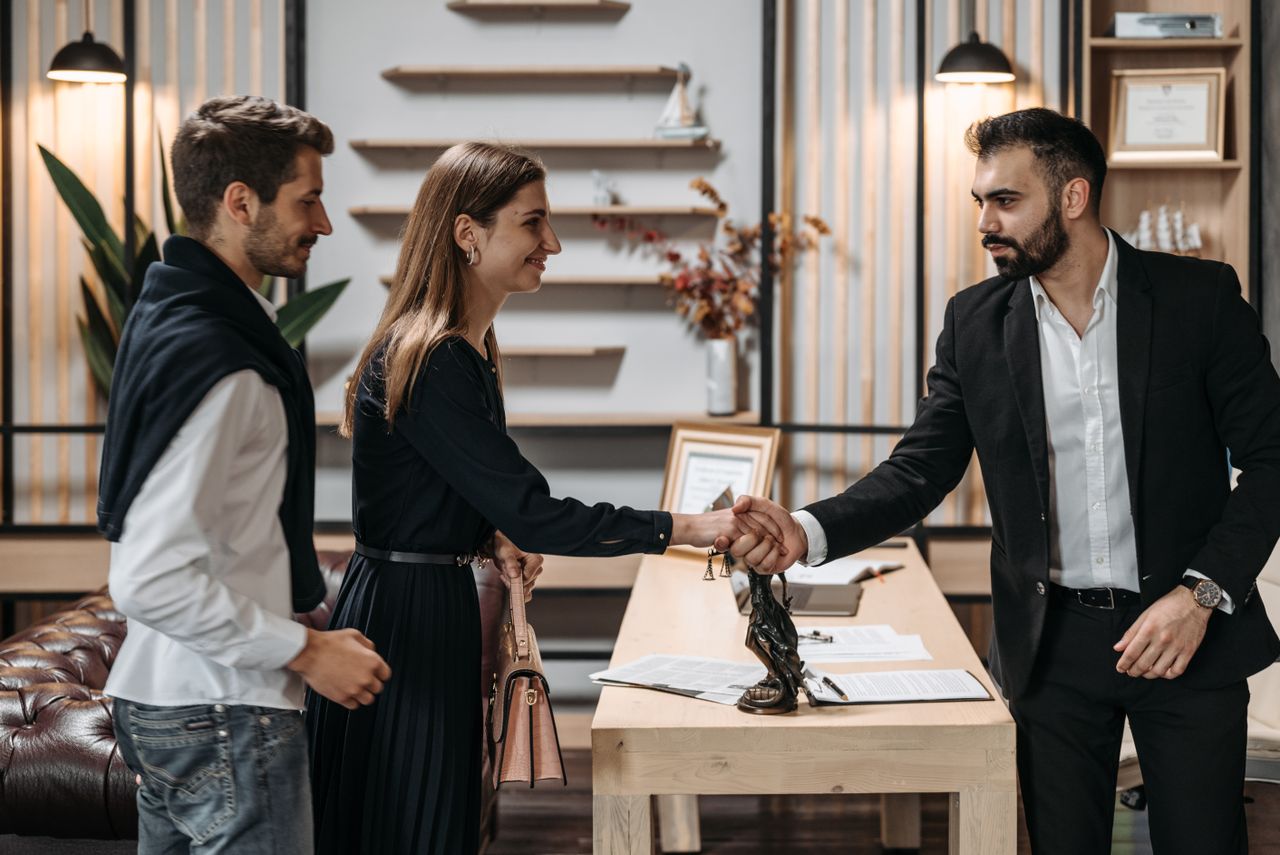
Active Shooter Training for Law Firms and Legal Offices: Preparing Staff for High-Conflict Client Work
Active shooter training for law firms is preparedness instruction that teaches attorneys, paralegals, and front-desk staff how to recognize an escalating threat, choose quickly between escaping, denying access, and defending, and act without waiting for permission. It is built for an office where the business itself is conflict, because a law practice earns its living in the middle of other people's worst disputes.
That is the part most firms underestimate. A managing partner will invest in cyber insurance, conflict checks, and trust-account controls, then leave a single receptionist alone at a glass front door on the day a contested custody ruling comes down. In our 30 years of training, we have found that the risk follows the emotion, and few workplaces sit closer to raw emotion than a legal office.
Why are law offices a distinct risk environment?
Most professional offices deal with customers. Law offices deal with people in the middle of losing something: a marriage, a child's living arrangement, a home, a job, a business, or their freedom. Family law, criminal defense, landlord-tenant, employment, probate, and personal injury practices all put staff face to face with someone whose life is being rearranged by a process they cannot control.
Two structural details make it worse. Firm websites publish attorney names, photographs, practice areas, and street addresses, and most suites leave a lobby door unlocked during business hours. And in a divorce or an eviction, the opposing party already knows exactly where you work.
The federal data on violence directed at legal proceedings supports the concern. The U.S. Marshals Service, which protects the federal judiciary, reported 509 threats against 379 federal judges in fiscal year 2024 (U.S. Marshals Service, 2024). Judges have protective details and controlled buildings. The lawyer arguing the same case usually has a storefront office and a doorbell.
Workplace violence more broadly has not receded either. The Bureau of Labor Statistics recorded 470 workplace homicides in 2024, up from 458 the year before, and 379 of those involved a firearm (BLS, 2025).
What does an effective program for a legal practice cover?
A program built for a law firm has to match the way legal offices are actually laid out and staffed. That usually means a small reception area, a conference room near the front, a corridor of private offices behind a door that may or may not lock, and a back stairwell nobody has walked in years.
The core elements we cover:
Front-desk awareness. Reception is the firm's earliest sensor. Staff learn what escalation looks like in a waiting room and what to do with that observation before it becomes an emergency.
Escape first. Every exit, including the service corridor and the stairwell, and the willingness to leave a laptop, a file, and a client behind.
Denying access. Which suite doors lock and which are decorative, what furniture is heavy enough to hold, and how to make a hallway of offices look and sound empty.
Defending as a last resort. What is available in a conference room, and how a group of people moving together changes the outcome for everyone.
Meeting responding officers. What arriving deputies will do first, why they may step past someone who is injured, and how to avoid being mistaken for the threat.
Client-meeting scenarios. A closed conference room, one door, and an emotionally escalated party is a specific problem that deserves its own walkthrough.
When staff have rehearsed the five decisions that decide the outcome, the first seconds stop being a debate. That matters in a legal office, where the instinct is almost always to keep talking, keep de-escalating, and keep being professional.
How do you protect a receptionist who is alone at the door?
Reception in a law firm is a security position that nobody calls a security position. That desk greets process servers, opposing parties, clients in crisis, and walk-ins with no appointment, often alone.
Practical steps we recommend:
A discreet duress signal that reaches the back offices without a phone call
A controlled door between reception and the attorney corridor
A rule that nobody staffs the suite alone when a contested-matter client is scheduled
Scheduling that avoids putting adverse parties in the same waiting room
A named person responsible for locking up
Teaching front-desk staff the difference between an unpleasant visitor and spotting a threat while it is still forming turns a vague bad feeling into something a supervisor can act on. Most violence in professional settings is preceded by contacts, statements, or behavior that somebody noticed and nobody documented.
Who at the firm should be trained?
Everyone in the suite, not only the attorneys. That includes paralegals, legal assistants, receptionists, billing and records staff, law clerks and summer interns, and the office manager who will be asked to lead when nobody else does. Firms sharing a building should coordinate with property management, because in an emergency the elevator lobby and the parking garage belong to everyone.
Frequently asked questions
Why would a law firm need active shooter training when it has no cash on site? The risk in a legal office is not robbery, it is grievance. Family law, criminal defense, eviction, employment, and probate matters put staff in front of people who are losing something that matters deeply to them, and that emotional exposure is what drives the threat.
Should attorneys and support staff attend the same session? Yes. During a real event there is no time to reconcile two different sets of instructions, and support staff are usually closer to the front door than the partners are. Shared training also removes confusion about who is directing what.
What should a receptionist do if a visitor escalates at the desk? The first goal is to create distance and get help without escalating further, which is why a silent duress signal and a controlled door matter more than a scripted phrase. If the person becomes a physical threat, leaving the desk and moving toward an exit is the right instinct, not staying to manage the conversation.
How long does training take, and can it fit into a workday? Most law-firm sessions run a few hours and can be scheduled around court calendars, often on a light docket day or during an existing all-hands meeting. Firms frequently split staff into two groups so the phones stay covered.
Does having a keycard entry system make training unnecessary? No. Access control protects the space behind the door, but reception, the lobby, the elevator bank, and the parking area remain open, and doors get propped for deliveries. Technology narrows the opening; it does not close it.
Can a firm certify its own internal instructor? Yes. For firms with several offices or steady staff turnover, certifying an internal instructor is usually the most sustainable approach, because new hires can be trained as they arrive rather than waiting for an annual session.
Ready to protect your practice?
If your firm has never walked through what reception, the conference room, and the attorney corridor would actually do in the first sixty seconds, that is the gap worth closing this quarter. A.L.I.V.E. training is built for real workplaces with real layouts, not for a video that plays once a year. Contact our team to schedule a session or discuss certifying an instructor inside your firm.
About the author
Michael D. Julian brings more than 30 years of security and investigative experience to A.L.I.V.E. Active Shooter Survival Training. He served as President of the California Association of Licensed Investigators (CALI) from 2005 to 2015 and is the creator of the A.L.I.V.E. active shooter survival training program, which is delivered to businesses, schools, healthcare organizations, and government agencies nationwide. Connect with Michael on LinkedIn.
LEARN HOW TO SURVIVE AN ACTIVE SHOOTER!
ALSO AVAILABLE FOR AUDIO DOWNLOAD, E-BOOK, AND PAPERBACK / HARDCOVER ON AMAZON



Hear From An A.L.I.V.E. Student Survivor Of The Las Vegas Massacre
"As a retired 32 year law enforcement veteran, with several years of SWAT and tactical experience, I learned some different unique perspectives as it pertains to civilians dealing with active threat situations. Very good class for civilians who may have never experienced reacting to a life and death stressful situation."
- Christopher C.
A.L.I.V.E. STANDS FOR:
Assess
Assess the situation quickly
Leave
Leave the area if you can
Impede
Impede the shooter
Violence
Violence may be necessary
Expose
Expose your position carefully for safety
INDUSTRIES WE SERVE
Corporations
Government
Healthcare
Places of worship
Schools & Universities
Venues
MICHAEL JULIAN
Creator of A.L.I.V.E.
A.L.I.V.E., which stands for Assess, Leave, Impede, Violence, and Expose, was created in 2014 when Michael began teaching his Active Shooter Survival philosophy throughout the United States. His book on the subject, 10 Minutes to Live: Surviving an Active Shooter Using A.L.I.V.E. was published in 2017 and the online version of the A.L.I.V.E. Training Program was launched in 2019 and is now part of the corporate security training program for companies throughout the world.

Why A.L.I.V.E. Active Shooter
Survival Training Program?
The A.L.I.V.E. Active Shooter Survival Training Program is a comprehensive training program designed to provide individuals with the necessary skills and knowledge to survive an active shooter incident. Its emphasis on situational awareness and decision-making makes it a practical and effective approach to active shooter situations. By empowering individuals to take proactive measures to protect themselves and others, the program can help prevent tragedies and save lives.