"Michael Julian has written an excellent book. Practical, detailed, and a potential life saver if you find yourself in the midst of a targeted attack."
Active Shooter Training for Grocery Stores and Supermarkets: A 2026 Preparedness Guide for Store Managers
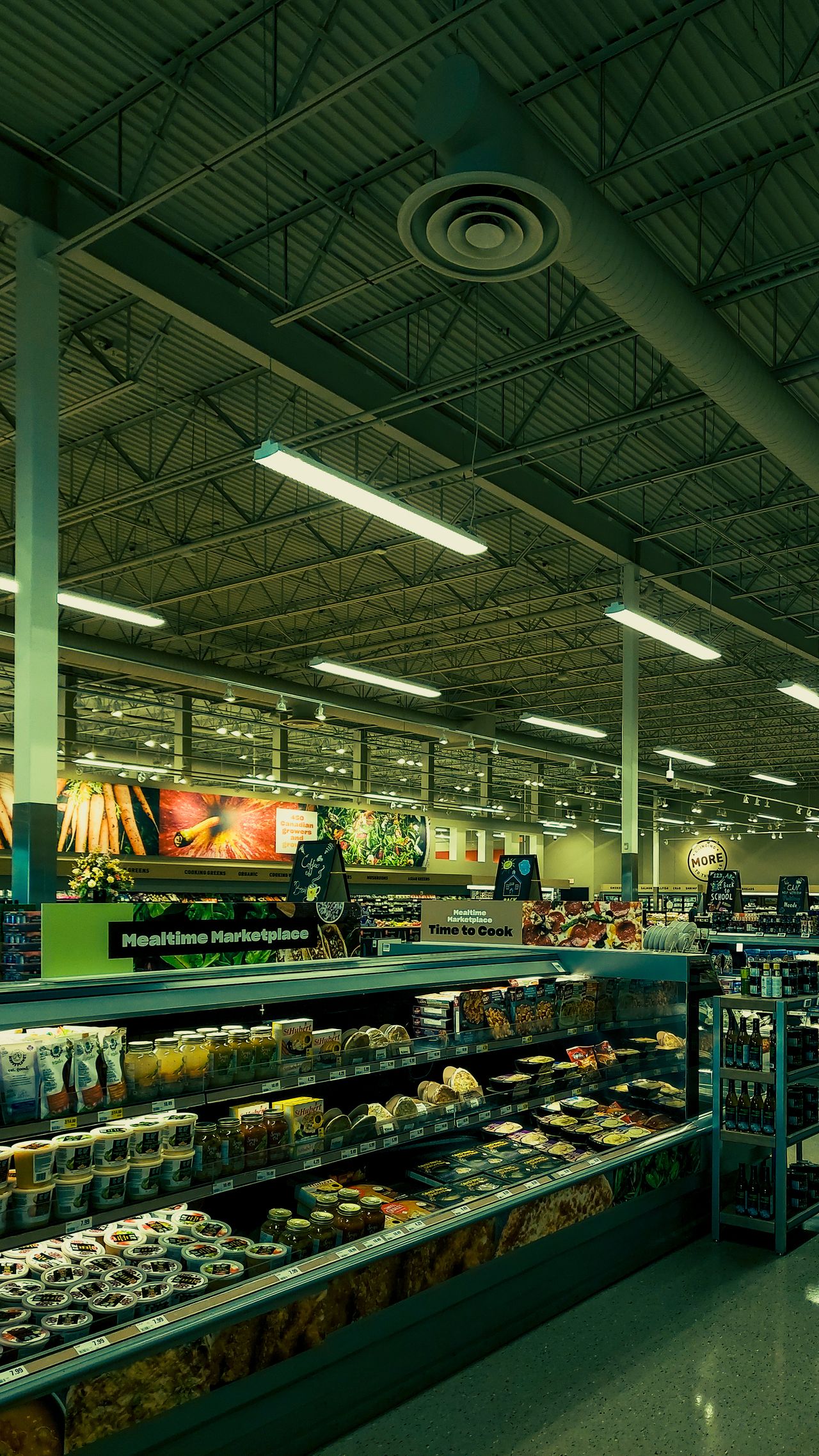
Active shooter training for grocery stores prepares managers and employees to recognize a developing threat, move shoppers and staff to safety, and respond decisively in the seconds before help arrives. A supermarket is one of the hardest retail environments to secure: it is open to everyone, packed with people during peak hours, built with long sightlines down aisles, and staffed by employees who were hired to stock shelves and run registers, not to manage violence.
That combination is exactly why preparation matters. A grocery store cannot lock its doors during business hours, and it cannot screen the people who walk in. What it can do is train its team to act.
Why do grocery stores need active shooter training?
Commercial and retail settings remain one of the most common locations for these events. In its most recent annual report, the FBI designated 24 shootings as active shooter incidents in 2024, four of which occurred in commerce settings, and the year's incidents produced 106 casualties, including 23 people killed and 83 wounded (FBI, 2025). Even in a year when the national total fell, the commerce category did not disappear.
Grocery stores carry a specific risk profile. They operate on thin margins with high foot traffic, they stay open long hours, and many are anchors in neighborhoods where they function as community gathering points. The 2022 attack at a Tops supermarket in Buffalo, New York is the reference point most managers already carry in the back of their minds. The lesson from these events is consistent: the outcome is shaped in the first two to three minutes, before any officer reaches the door, and those minutes belong to the people already inside.
What makes a supermarket harder to secure than other retail?
Several features of the grocery environment work against a fast, orderly response, and a plan has to account for each one.
•          Open floor plan with long aisles. Sightlines are long, but so are the distances to an exit. Employees need to know every egress point, not just the front doors.
•          Large, mixed crowds. Families with children, older shoppers, and people with limited mobility are all present at once. A response that assumes everyone can sprint is a response that leaves people behind.
•          Back-of-house complexity. Stockrooms, loading docks, coolers, and offices are places to shelter or escape, but only if staff know how to use them and how to secure them.
•          Distributed staff. Employees are spread across registers, the deli, produce, and receiving. There is rarely a single moment when everyone can be addressed at once, so training has to reach each person individually.
What does active shooter training for grocery staff cover?
Effective training gives every employee a simple, rehearsed framework rather than a binder no one reads. For frontline teams, the core decisions come down to getting out, staying out of sight and out of reach, or, as an absolute last resort, taking action to disrupt an attacker. These are the same principles behind the five steps everyone should know in an emergency, applied to the specific geography of a store.
At A.L.I.V.E., our training for retail and grocery environments focuses on a few grocery-specific priorities:
1.        Evacuation routes from every department. A cashier's fastest exit is not the same as a stocker's in receiving. Each employee learns the closest and the secondary route from their normal station.
2.        Shelter points that actually protect. Coolers, offices, and stockrooms can shelter people, but only if staff know which doors lock and how to barricade the ones that do not.
3.        Guiding shoppers, not just saving yourself. Employees are the calm voices customers will follow. Training covers how to direct panicked shoppers toward an exit quickly and clearly.
4.        Communication. How to alert the store, how to call 911 with a useful description, and what to tell arriving officers.
5.        Caring for vulnerable shoppers. Practical steps for helping older customers, parents with strollers, and people who cannot move quickly.
Because grocery employees turn over frequently, the most durable programs treat this as recurring instruction. Reinforcing workplace safety training for frontline retail employees at regular intervals keeps a store's readiness from decaying as staff change.
How should a store manager build a preparedness plan?
Start with the building. Walk the store as if you were a shopper who needed to leave fast, and map every exit, every lockable room, and every blind corner. Then walk it as an employee at each station and confirm that the people who work there know the same routes you do.
Coordinate with local law enforcement before anything happens. In our 30 years of training organizations, the stores that recover best are the ones whose managers already knew the officers who would respond, and whose floor plans were already on file. Run brief, low-drama drills that respect the fact that your building is full of customers. And write your plan down in plain language, because the person who needs it most may be a nineteen-year-old cashier three weeks into the job.
Frequently asked questions
Is active shooter training necessary for a grocery store? Yes. Grocery stores are open, crowded, commercial settings, and commerce locations continue to account for a meaningful share of active shooter incidents each year. Training gives staff a rehearsed response for the critical first minutes, which is when survival outcomes are largely determined.
What should a cashier do first in an active shooter situation? The first priority is to get away from the threat if a safe path exists, moving toward the nearest exit and taking nearby shoppers along. If escape is not possible, the cashier should get out of sight behind solid cover, silence their phone, and stay quiet until law enforcement arrives.
How often should grocery employees be retrained? Because grocery stores experience high staff turnover, training should be reinforced regularly rather than treated as a one-time onboarding event. Many stores schedule refreshers periodically so that new hires are covered and experienced staff keep the response fresh.
Can training really make a difference in the first few minutes? Yes. Most active shooter events are over in minutes, often before police arrive. Employees who have rehearsed where to go and what to do act faster and hesitate less, and that speed protects both staff and shoppers.
Does A.L.I.V.E. training work for stores of different sizes? Yes. The A.L.I.V.E. framework scales from a small neighborhood market to a large supermarket. The principles are the same, and the training is tailored to each store's layout, staffing, and exits.
Prepare your store before you need to
The best time to build a plan is a normal Tuesday, not the moment a threat is already inside. If you manage a grocery store or supermarket and want your team prepared, contact A.L.I.V.E. Active Shooter Survival Training to discuss training built around your store.
About the author
Michael D. Julian is the creator of the A.L.I.V.E. Active Shooter Survival Training program and brings more than 30 years of experience in security and protection. He served as President of the California Association of Licensed Investigators (CALI) from 2005 to 2015 and has spent his career helping organizations prepare for violent events they hope never to face. Connect with him on LinkedIn.
LEARN HOW TO SURVIVE AN ACTIVE SHOOTER!
ALSO AVAILABLE FOR AUDIO DOWNLOAD, E-BOOK, AND PAPERBACK / HARDCOVER ON AMAZON



Hear From An A.L.I.V.E. Student Survivor Of The Las Vegas Massacre
"As a retired 32 year law enforcement veteran, with several years of SWAT and tactical experience, I learned some different unique perspectives as it pertains to civilians dealing with active threat situations. Very good class for civilians who may have never experienced reacting to a life and death stressful situation."
- Christopher C.
A.L.I.V.E. STANDS FOR:
Assess
Assess the situation quickly
Leave
Leave the area if you can
Impede
Impede the shooter
Violence
Violence may be necessary
Expose
Expose your position carefully for safety
INDUSTRIES WE SERVE
Corporations
Government
Healthcare
Places of worship
Schools & Universities
Venues
MICHAEL JULIAN
Creator of A.L.I.V.E.
A.L.I.V.E., which stands for Assess, Leave, Impede, Violence, and Expose, was created in 2014 when Michael began teaching his Active Shooter Survival philosophy throughout the United States. His book on the subject, 10 Minutes to Live: Surviving an Active Shooter Using A.L.I.V.E. was published in 2017 and the online version of the A.L.I.V.E. Training Program was launched in 2019 and is now part of the corporate security training program for companies throughout the world.

Why A.L.I.V.E. Active Shooter
Survival Training Program?
The A.L.I.V.E. Active Shooter Survival Training Program is a comprehensive training program designed to provide individuals with the necessary skills and knowledge to survive an active shooter incident. Its emphasis on situational awareness and decision-making makes it a practical and effective approach to active shooter situations. By empowering individuals to take proactive measures to protect themselves and others, the program can help prevent tragedies and save lives.