"Michael Julian has written an excellent book. Practical, detailed, and a potential life saver if you find yourself in the midst of a targeted attack."
Why the 2026 Tumbler Ridge Shooting Reinforces the Need for Active Threat Preparedness
The 2026 Tumbler Ridge school shooting in Tumbler Ridge, British Columbia, Canada was one of the deadliest mass shootings in Canadian history. On February 10, 2026, an 18-year-old attacker killed relatives at a residence and then opened fire at Tumbler Ridge Secondary School, killing multiple students and a teacher before dying by suicide. Police say nine people were killed and 27 others were injured in the incident, making it the most severe school shooting in Canada since 1989.
The tragedy shocked not only the local community of fewer than 3,000 residents, but the entire nation — and it highlights the harsh reality that acts of violence can occur in any community, regardless of location or prior expectation.
While public discussion in the aftermath rightly focuses on sympathy and support for victims and families, there is an equally important conversation about preparedness, training, and survivability in the face of active threats.
Violence Does Not Always Occur Where We Expect It
School shootings are statistically rare in Canada when compared to other countries, but when they occur, they unfold rapidly and with devastating consequences. The Tumbler Ridge shooting began with an attack in a residence and then transitioned to a school setting, illustrating how a violent event can quickly escalate and cross environments without notice.
In situations like this, the immediate moments — seconds and minutes — determine survival outcomes. People must often make critical decisions before first responders can arrive.
Awareness Alone Is Not Preparedness
Many organizations focus on awareness training: knowing exit doors, understanding lockdown procedures, or recognizing that violence “could” happen. These are important components of a safety plan, but they are not the same as survival preparedness.
Awareness training assumes:
-
Rational thinking during crisis
-
Calm responses under stress
-
Time to evaluate a situation before acting
Physical and psychological stress often override these assumptions, causing instinctive responses that may not align with plans or checklists.
Active Threat Preparedness Trains the Brain to Act
Survival-oriented training programs, like the A.L.I.V.E. framework, focus on building conditioned responses through repetition, scenario-based learning, and decision-making under stress. Instead of hoping people remember what to do, survival training helps them apply what they’ve practiced when it matters most.
Key aspects include:
-
Early threat recognition and pattern identification
-
Decisive movement toward safety instead of hesitation
-
Adaptive decision-making when plans change
-
Mental conditioning that prepares individuals before the moment arrives
This type of training works not just on knowing what to do, but on enabling the brain to do it under pressure.
Training Turns Instinct Into Functional Response
Human survival instinct is not automatic intelligence. It responds based on previous experience. Without training, people may freeze, delay, or default to less effective behaviors in a stressful threat. With structured training, however, instinct becomes informed by practiced action — increasing the likelihood of survival.
People do not rise to the occasion; they fall back on what they have prepared for.
Preparation Before Violence Occurs Matters Most
Violent incidents rarely come with warning. The Tumbler Ridge shooting was not anticipated by the school or community, and that unpredictability is part of what makes these events so dangerous. Preparation — mental, physical, and procedural — must happen before anyone is confronted with a threat.
Comprehensive active threat preparedness includes:
-
Training beyond awareness to survival principles
-
Scenario rehearsals under pressure
-
Decision frameworks that adapt to changing conditions
-
Empowerment to act, not just to observe
The Takeaway
The 2026 Tumbler Ridge shooting is a tragic reminder that violence can strike without warning, even in communities believed to be safe. Awareness and safety protocols are important, but they are not sufficient to ensure survival when seconds matter most. Training that reshapes instinct into practiced, decisive action can make the difference between panic and survival.
Organizations, schools, workplaces, and communities should take this moment as a call to invest in preparation that works when it matters most — before the unthinkable becomes reality. Contact us today to learn these crucial methods of survival.
About the Author
Michael D. Julian is President of MPS Security & Protection and a 30-plus-year veteran of the security and investigations industry. He served as President of the California Association of Licensed Investigators (CALI) from 2005 to 2015 and has led executive protection, residential security, and corporate investigations engagements for Fortune 500 principals, high-net-worth families, and public figures across the United States. Connect with Michael on LinkedIn.
LEARN HOW TO SURVIVE AN ACTIVE SHOOTER!
ALSO AVAILABLE FOR AUDIO DOWNLOAD, E-BOOK, AND PAPERBACK / HARDCOVER ON AMAZON



Hear From An A.L.I.V.E. Student Survivor Of The Las Vegas Massacre
"As a retired 32 year law enforcement veteran, with several years of SWAT and tactical experience, I learned some different unique perspectives as it pertains to civilians dealing with active threat situations. Very good class for civilians who may have never experienced reacting to a life and death stressful situation."
- Christopher C.
A.L.I.V.E. STANDS FOR:
Assess
Assess the situation quickly
Leave
Leave the area if you can
Impede
Impede the shooter
Violence
Violence may be necessary
Expose
Expose your position carefully for safety
INDUSTRIES WE SERVE
Corporations
Government
Healthcare
Places of worship
Schools & Universities
Venues
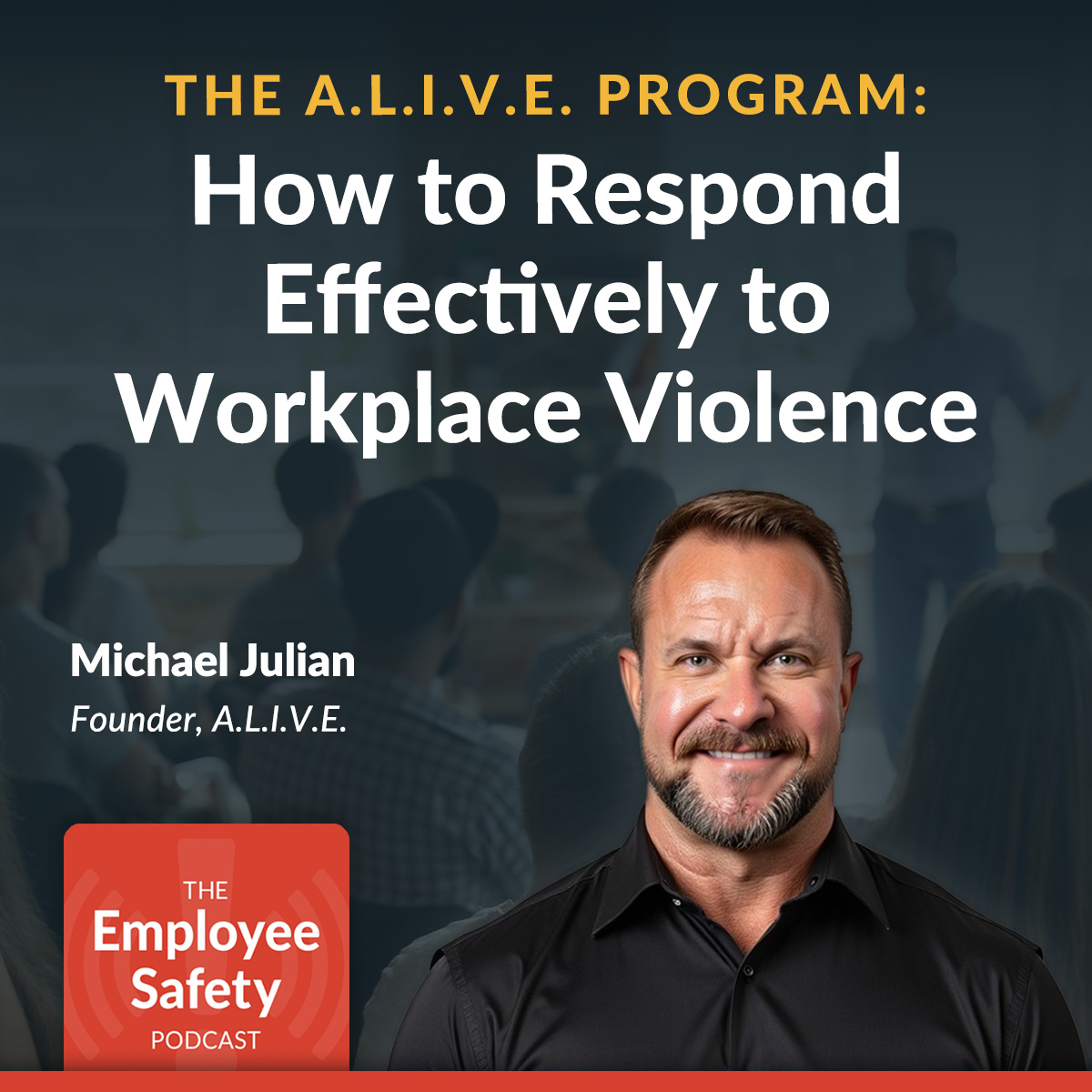
MICHAEL JULIAN
Creator of A.L.I.V.E.
A.L.I.V.E., which stands for Assess, Leave, Impede, Violence, and Expose, was created in 2014 when Michael began teaching his Active Shooter Survival philosophy throughout the United States. His book on the subject, 10 Minutes to Live: Surviving an Active Shooter Using A.L.I.V.E. was published in 2017 and the online version of the A.L.I.V.E. Training Program was launched in 2019 and is now part of the corporate security training program for companies throughout the world.

Why A.L.I.V.E. Active Shooter
Survival Training Program?
The A.L.I.V.E. Active Shooter Survival Training Program is a comprehensive training program designed to provide individuals with the necessary skills and knowledge to survive an active shooter incident. Its emphasis on situational awareness and decision-making makes it a practical and effective approach to active shooter situations. By empowering individuals to take proactive measures to protect themselves and others, the program can help prevent tragedies and save lives.