"Michael Julian has written an excellent book. Practical, detailed, and a potential life saver if you find yourself in the midst of a targeted attack."
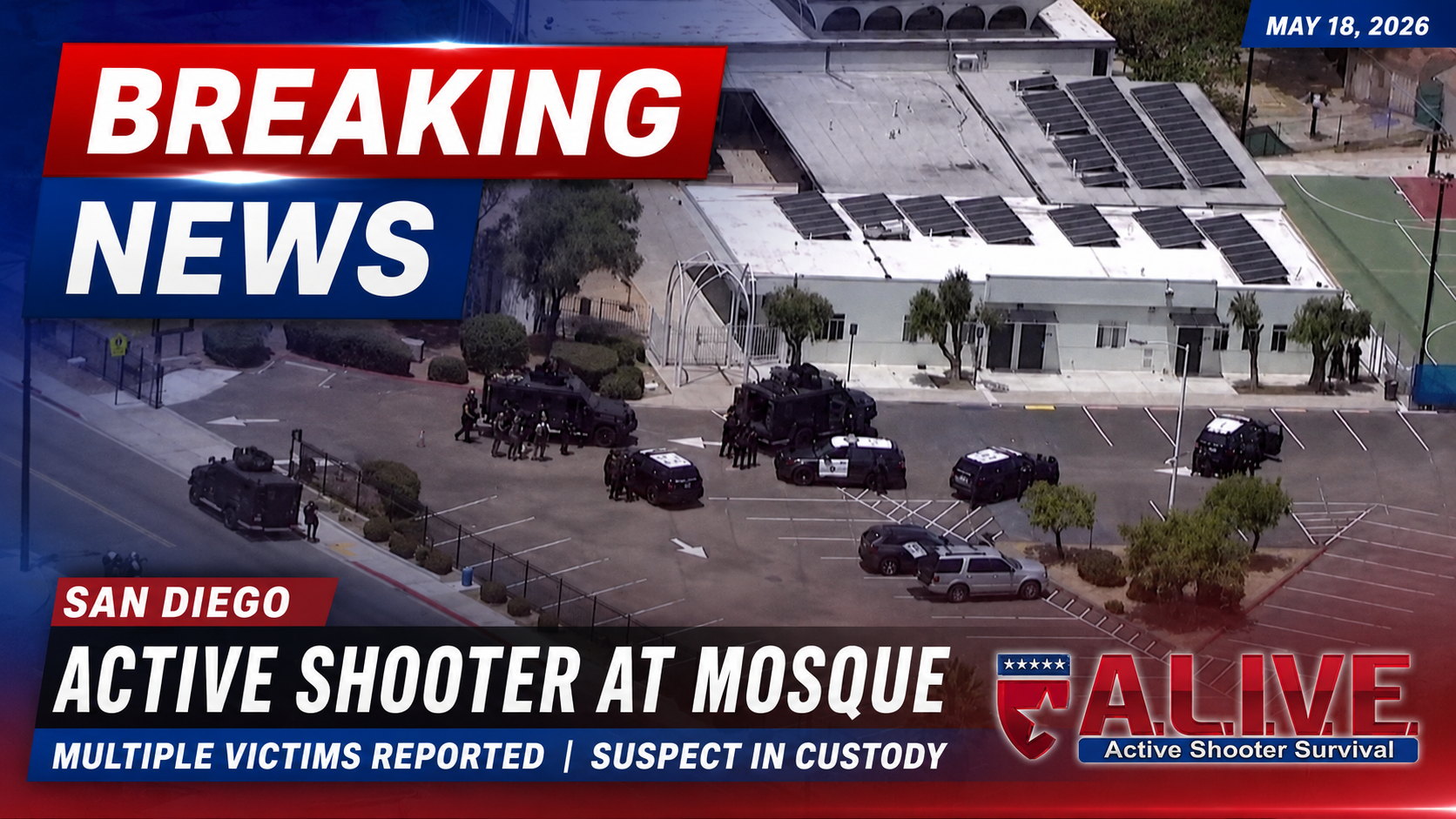
San Diego Mosque Shooting 5-18-26: Why Active Shooter Training Is No Longer Optional
This morning, the Clairemont neighborhood of San Diego became the latest community shaken by gun violence. At approximately 11:40 a.m. local time, two attackers opened fire at the Islamic Center of San Diego - the largest mosque in San Diego County and home to the Al Rashid School. By the time officers neutralized the threat just after 1:00 p.m., three people were dead, including a security guard and two staff members of the on-site Islamic school, along with both suspects. Multiple others were injured.
Our hearts are with the victims, their families, and the entire ICSD community. The pain of this day cannot be erased by analysis or commentary. But for those of us who work in safety and preparedness, this morning is also a sobering reminder of an uncomfortable truth: no community, no congregation, and no workplace is exempt from the threat of an active shooter. The question is no longer whether attacks like this happen - it is whether the people inside the building are prepared when they do. That is exactly why active shooter training has moved from a “nice to have†to a baseline operational requirement for any organization that gathers people in 2026.
What We Know About Today's Attack
According to the San Diego Police Department and reporting from CNN, NBC News, and local outlets, two attackers - reported to be 17 and 19 years old - entered the ICSD campus and began shooting. Police Chief Scott Wahl confirmed that investigators are treating the incident as a hate crime “until it’s not,†given the location and the apparent targeting of a house of worship. The campus, which includes a Kâ€"8 Islamic school, was in the middle of normal weekday operations when the attack began.
The on-site security guard who was killed reportedly engaged the attackers, an action that almost certainly slowed their advance and saved lives. That detail matters. It illustrates exactly why preparedness - not just written policy - is the difference between a tragedy and a catastrophe.
A Pattern That Cannot Be Ignored
According to the FBI’s most recent Active Shooter Incidents in the United States report, there were 24 designated active shooter incidents in 2024 - a 50 percent drop from 2023’s 48. While that year-over-year decline is real and welcome, the longer arc tells a darker story: between 2020 and 2024, the U.S. recorded 223 active shooter incidents, a 70 percent increase compared to the previous five-year period. Houses of worship, schools, workplaces, and open public spaces remain the predominant settings. (For a deeper breakdown of the numbers and what they mean for organizational planning, see our analysis of recent active shooter incident statistics.)
Translation: incidents may be down year over year, but the underlying threat environment has not normalized. Faith communities, in particular, have repeatedly found themselves in the crosshairs - from Pittsburgh to Charleston to Sutherland Springs, and now Clairemont. Any organization that assumes “it can’t happen here†is reading the data wrong.
Why Active Shooter Training Saves Lives
The most dangerous moment in an active shooter incident is the first 90 seconds. That is, on average, the window before law enforcement arrives on scene. What happens during those 90 seconds is almost entirely determined by the people already inside the building - their reflexes, their decisions, and their training.
Effective active shooter training does three things that nothing else can. First, it rewires the freeze response. Untrained civilians overwhelmingly default to denial and paralysis when gunfire begins; they wait, they try to make sense of what they are hearing, they lose precious seconds. Training compresses that decision window from minutes to seconds. Second, it gives people a real playbook. The federal “Run. Hide. Fight.†framework is a useful starting point, but it is not enough on its own. True preparedness means knowing the exits in every room you occupy, knowing how to barricade a door, knowing how to apply a tourniquet, and knowing when to act decisively rather than waiting for permission. Third, it builds institutional muscle memory. When staff at a school, mosque, church, synagogue, office, or clinic have trained together, their response is coordinated. They lock down faster. They communicate with police more clearly. They protect children and vulnerable people instinctively.
Today’s attack at ICSD demonstrates the cost of an unprepared environment - and, in the case of the security guard who confronted the attackers, the lifesaving impact of someone willing to act. Imagine the outcome if every staff member, teacher, and volunteer in that building had been trained to the same level.
What Houses of Worship and Workplaces Should Do Now
If your organization does not have an active shooter response plan, today is the day to start. If it does, today is the day to test it. Walk every floor. Identify primary and secondary exits. Determine how doors lock and who has keys. Map the locations of first-aid and trauma kits. Run a tabletop exercise with leadership before the end of the month. Schedule a live, in-person active shooter training for your full staff and key volunteers within the next quarter.
These are not extreme measures. They are the baseline standard of care for any organization that gathers people in 2026 - and that includes mosques, churches, synagogues, temples, schools, medical practices, retail stores, and offices of every size.
Take the Next Step
A.L.I.V.E. Active Shooter Survival Training has spent more than a decade preparing organizations to do exactly what today’s headlines demand: respond in seconds, protect the people in their care, and survive the unsurvivable. Our five-step framework - the A.L.I.V.E. Method (Assess, Leave, Impede, Violence, Expose) - was built for civilians and frontline staff, not soldiers, and is designed to give your team practical, repeatable skills they can use under extreme stress.
The Islamic Center of San Diego did not choose today. Neither did the children inside Al Rashid School. But every leader of every gathering place in America gets to choose, right now, whether their people will be ready when seconds matter most.
To schedule an active shooter training assessment or speak with our team about a program tailored to your organization, contact ALIVE Active Shooter Survival Training.
About the Author
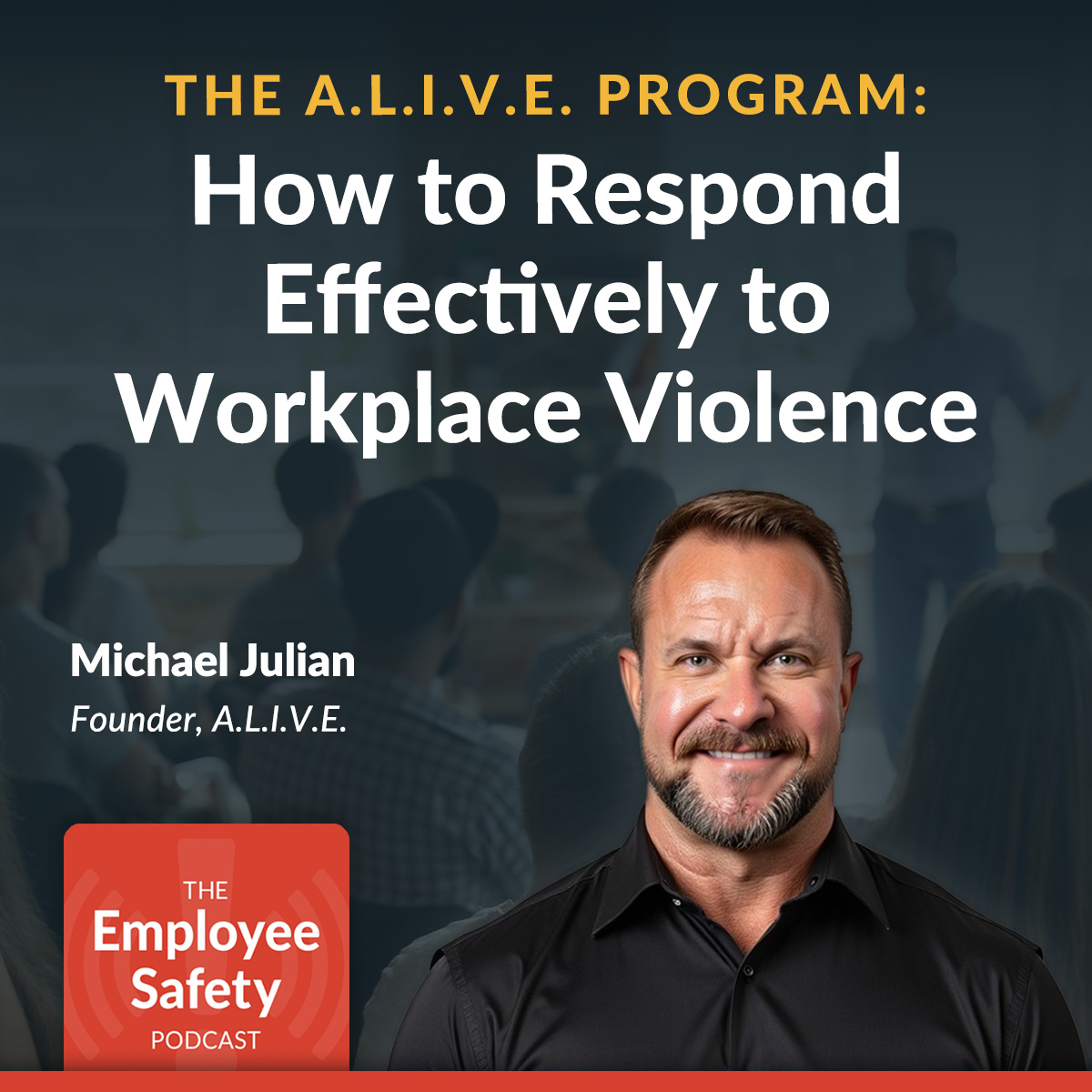
This article was written by the team at A.L.I.V.E. Active Shooter Survival Training, the nationally recognized organization behind the A.L.I.V.E. Method (Assess, Leave, Impede, Violence, Expose). Founded by Michael Julian - author of 10 Minutes to Live: Surviving an Active Shooter Using A.L.I.V.E. - A.L.I.V.E. has trained tens of thousands of employees, educators, faith leaders, and first responders across the United States since 2014. Our instructors include former law enforcement, military, and corporate security professionals who deliver in-person and online active shooter training to schools, houses of worship, healthcare systems, and Fortune 500 employers.
Learn more about our programs, instructor certification, and on-site training options at activeshootersurvivaltraining.com.
LEARN HOW TO SURVIVE AN ACTIVE SHOOTER!
ALSO AVAILABLE FOR AUDIO DOWNLOAD, E-BOOK, AND PAPERBACK / HARDCOVER ON AMAZON



Hear From An A.L.I.V.E. Student Survivor Of The Las Vegas Massacre
"As a retired 32 year law enforcement veteran, with several years of SWAT and tactical experience, I learned some different unique perspectives as it pertains to civilians dealing with active threat situations. Very good class for civilians who may have never experienced reacting to a life and death stressful situation."
- Christopher C.
A.L.I.V.E. STANDS FOR:
Assess
Assess the situation quickly
Leave
Leave the area if you can
Impede
Impede the shooter
Violence
Violence may be necessary
Expose
Expose your position carefully for safety
INDUSTRIES WE SERVE
Corporations
Government
Healthcare
Places of worship
Schools & Universities
Venues
MICHAEL JULIAN
Creator of A.L.I.V.E.
A.L.I.V.E., which stands for Assess, Leave, Impede, Violence, and Expose, was created in 2014 when Michael began teaching his Active Shooter Survival philosophy throughout the United States. His book on the subject, 10 Minutes to Live: Surviving an Active Shooter Using A.L.I.V.E. was published in 2017 and the online version of the A.L.I.V.E. Training Program was launched in 2019 and is now part of the corporate security training program for companies throughout the world.

Why A.L.I.V.E. Active Shooter
Survival Training Program?
The A.L.I.V.E. Active Shooter Survival Training Program is a comprehensive training program designed to provide individuals with the necessary skills and knowledge to survive an active shooter incident. Its emphasis on situational awareness and decision-making makes it a practical and effective approach to active shooter situations. By empowering individuals to take proactive measures to protect themselves and others, the program can help prevent tragedies and save lives.